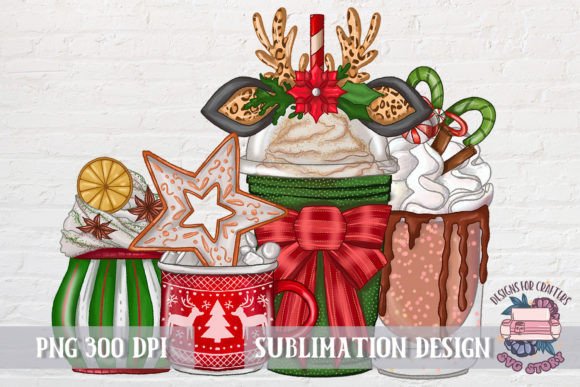
Review: Christmas Coffee PNG Sublimation for Embroidery
As a designer who spends more time staring at stitch charts than holiday lights, I approach new assets with a critical eye. When I first pulled up the Christmas Coffee PNG Sublimation file, my initial reaction wasn't just about the cute aesthetic; it was about translation. How does this digital illustration survive the journey from a screen to a textured fabric under a needle? This isn't just a graphic; it's a potential machine embroidery design waiting to be digitized or used as a reference for a custom project. For Etsy sellers and craft business owners, understanding the nuance of such a design before committing thread and fabric is the difference between a best-selling item and a hoop nightmare.
The Visual Mood and Design Personality
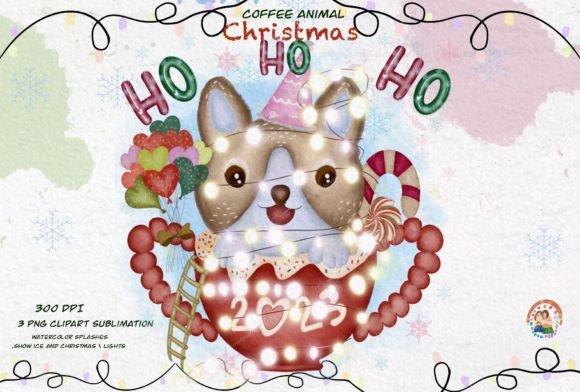
The first thing that strikes me about this Illustrations piece is its cozy, inviting atmosphere. It captures that specific "hygge" moment we all crave in December—the warmth of a mug against the chill of winter. The layout feels balanced, likely featuring a steaming cup surrounded by festive elements like holly, snowflakes, or perhaps a knitted sweater pattern texture. For an embroidery project, this visual personality suggests a design that belongs on items meant to be held, worn, or displayed prominently. It screams "personalized gift." However, the devil is always in the details. If the original PNG relies heavily on subtle gradients or very fine lines to create steam or texture, those elements need careful consideration when converting to a digital embroidery file. A satin stitch might be perfect for the bold outlines of the cup, but the steam might require a delicate running stitch or a light fill stitch to avoid looking like a solid block of thread.
Real-World Application: The Holiday Tote Scenario
Let's walk through a real-life scenario. Imagine a client requests a set of matching tote bags for a family Christmas gathering, or perhaps you are stocking your small shop with holiday merchandise. You decide to use the Christmas Coffee PNG Sublimation concept as the centerpiece. This is where practical judgment kicks in. A tote bag offers a large, flat canvas, which is ideal. However, tote bag canvas can be coarse. If the design includes tiny text like "Noel" or "Warmth," the stitch density must be managed carefully. Too dense, and the fabric puckers; too light, and the backing shows through, ruining the crisp look of the coffee cup.
In this context, the design shines as a tote bag design because the theme is universally loved. Everyone drinks coffee, and everyone loves Christmas. But if you are planning to scale this down for a baby embroidery project, like a onesie bib, you must be wary. Small hoop sizes limit your ability to maneuver complex angles. The curved surface of a mug in the illustration translates well to a curved hoop size on a cap, but only if the digitizer has accounted for push-pull distortion. Without proper stabilization, that perfect circle becomes an oval, and the professional appeal vanishes.
Fabric Choices and Stitching Clarity
The success of any embroidery project hinges on the relationship between the thread and the fabric. With a theme like Christmas Coffee PNG Sublimation, color contrast is vital. If you are stitching onto a dark navy sweatshirt for sweatshirt embroidery, you need high-contrast thread colors. White or cream steam against a dark background creates depth, but it also highlights every imperfection in the stitch path. Conversely, on a light linen tea towel, you might opt for earthy browns and forest greens. Here, the fabric texture plays a huge role. A looped towel fabric can swallow fine details, turning a crisp applique design look into a fuzzy mess.
I always advise testing on scrap fabric first. This is non-negotiable. Check how the stabilizer interacts with the material. For stretchy fabrics like those used in custom apparel, a cut-away stabilizer is often necessary to prevent the design from warping after wash cycles. If this design is intended for an embroidered patch, you have more freedom with density, as the patch is removed from the garment. However, for direct-to-garment applications, less is often more. Over-digitizing the foam of the coffee or the intricate patterns on the cup can make the finished product stiff and uncomfortable to wear.
Commercial Viability and Brand Consistency
For small shop product creators, consistency is key to building trust. If you sell a range of holiday items, does this design fit your brand voice? The Christmas Coffee PNG Sublimation asset suggests a boutique, handmade vibe rather than a mass-produced feel. This enhances the perceived value of your handmade product. Customers are willing to pay a premium for items that look thoughtfully crafted. A well-executed version of this design on a high-quality apron or pillow cover signals professionalism. It tells the buyer that you care about the details, from the choice of thread to the neatness of the backside stitching.
However, be mindful of where the design might struggle. Curved surfaces like caps require specific digitizing techniques to maintain the integrity of the coffee cup's shape. Detailed corners in the illustration might need to be simplified to prevent thread breaks or bird nests. If the design includes very small lettering, consider whether it will remain legible after the item has been washed ten times. Durability is a major factor in customer satisfaction and repeat business.
Practical Notes for the Professional Maker
Before you commit to a production run or list this as a new item in your store, keep these practical steps in mind:
- Test on Scraps: Always stitch a sample on the exact fabric you plan to use for the final product to check for puckering or gapping.
- Check Contrast: View your thread chart in black and white to ensure the design holds its shape without relying solely on color differences.
- Review Density: Ensure the fill stitch areas aren't too heavy for lightweight fabrics like baby clothes or thin tees.
- Confirm Hoop Size: Verify that the design fits within your available hoop dimensions without needing excessive re-hooping, which can cause alignment issues.
- Inspect Details: Zoom in on the digital preview. Are the tiny steam lines too close together? Will they merge when stitched?
- Licensing Check: Since this is a PNG sublimation asset, confirm the license terms. Can you use it as a reference for embroidery? Can you sell the finished physical items? Never assume commercial rights for design assets unless explicitly stated.
- Mockup Testing: Create printable mockups on both light and dark backgrounds to visualize the final finished product before spending money on materials.
In conclusion, the Christmas Coffee PNG Sublimation design holds immense potential for the creative entrepreneur. It taps into a timeless seasonal sentiment that resonates with a wide audience. Yet, its transition from a digital illustration to a tangible holiday embroidery piece requires a thoughtful approach. By respecting the limitations of the medium, choosing the right materials, and prioritizing stitch quality, you can transform a simple image into a cherished heirloom or a standout product in your commercial embroidery portfolio. It is not just about making something pretty; it is about creating something that lasts.